code · · 7 min read
by Colin Domoney
I remember the recording. Most people who were paying attention in early 2024 will. A small girl’s voice on a phone line saying come and get me, over and over, to people who were trying to and could not. Then I remember what came next, which was a wall of men in uniform and men in suits telling us that nothing had happened, or that they did not know, or that there were no troops there. And then I remember, eighteen months later, when a film about it won at Venice, the same wall telling us the film was a lie.
On Saturday I sat in the Athenaeum in Liverpool and watched The Voice of Hind Rajab. A month before that, on 19 August, the Israeli military admitted it had fired on her car.
I want to tell the story properly, because the story is the point, and then I want to talk about the film, and the room I watched it in, and why that room mattered.
Hind Rajab was five years old. On the morning of 29 January 2024 the Israeli army ordered residents of west Gaza City to move south. Her mother, Wissam Hamada, set off on foot. Hind went in the car with her uncle, her aunt, and four cousins, a black Kia Picanto. Her younger brother jumped out at the last second to stay with his mum. The evacuation order went up on social media at 9:32am. Satellite imagery later showed the road south was blocked by rubble from a bombed tower block. They could not go where they were told to go.
A Merkava tank at an intersection to the north opened fire on the car. Forensic Architecture counted 335 bullet holes in the bodywork. The uncle, the aunt and most of the children died in the first burst. Two survived: Hind and her fifteen-year-old cousin Layan.
Around half past two Layan got through to the Palestine Red Crescent, via a relative in Frankfurt who relayed the number. The operator, Omar al-Qam, called her back. She told him the tank was next to the car. He asked if she was hiding. She said yes. Then gunfire, then screaming, then nothing. Earshot analysed that audio: 64 rounds in six seconds, a rate of fire beyond an AK-pattern rifle and consistent with the weapons an Israeli tank crew carries. From the gap between bullet impact and muzzle blast they put the shooter at 13 to 23 metres. Nobody at that range fails to see who is in a car.
When the Red Crescent rang again, Hind picked up. Wounded, alone, surrounded by her family’s bodies. She stayed on that line for roughly three hours. Two of the people on the other end were Rana Faqih and Nisreen Qawas, the PRCS director of mental health. Her mother was patched in. They read the Koran with her. They asked her to count to ten. They told her help was coming, because it was, or was supposed to be.
The Red Crescent does not talk to the Israeli army directly. Clearing a route for an ambulance goes through intermediaries and takes hours. Permission came at around 5:40pm. Two paramedics, Yusuf al-Zeino and Ahmed al-Madhoun, left al-Ahli hospital, three kilometres away, on a route agreed with the Israeli side. At about six o’clock, over the radio: do you have your siren on? Just the lights. Oh, there it is. Then an explosion. Forensic Architecture identified the round from the sabot left at the scene: a 120mm high-explosive anti-tank shell, American made, fired from a Merkava.
Hind heard the explosion. Qawas asked her, and she said yes. Her last recorded words were about not wanting to press her top against the wound because her mother would have to wash it. Her voice went quiet around 7:30pm.
Twelve days later, when the army withdrew, the family found the car. Seven bodies inside. The ambulance was fifty metres away with the two medics in it. Nine people.
This is the bit I want to get exactly right, so I am going to keep it flat.
February 2024. The IDF told CNN it was “unfamiliar with the incident”. It told The Times of Israel its troops “were not present near the vehicle or within the firing range”. When asked about the ambulance, it said coordination had been unnecessary because there were no forces in the area. The Red Crescent said the army had never contacted it at all.
April to October 2024. The Washington Post, Sky News, Al Jazeera, Forensic Architecture and Earshot each reconstructed the day independently and reached the same place: tanks present, car shot at close range, ambulance shelled. Sky found a deleted IDF press release, published about twelve days after the killing, showing units in exactly that area. UN experts said in July it “might amount to a war crime”. A UN commission of inquiry later folded it into a wider finding.
September 2025. The film premiered at Venice, took the Grand Jury Prize, and got the longest standing ovation in the festival’s history. And the response from the usual quarters was that this was Hollywood, that it was propaganda, that the events were fabricated or misrepresented. There was a paid layer underneath that too: the Israeli government contracted an American firm to run sites pushing “crossfire” and “Palestinian gunmen” theories about her death.
19 August 2026. The IDF announced a criminal investigation. Its own findings say troops “fired at a vehicle that was approaching them”, and that “a shell was fired toward” the ambulance when it arrived. Two and a half years of “we were not there” ended in a paragraph.
I am not going to soften this, and I am not going to dress it up either. The story was true when we first heard the recording. It was true when they said it was not. It was true when they said the film was a lie. And what the forensic record now shows is worse than what most of us understood at the time: not a fog-of-war tragedy, but a car shot to pieces from twenty metres, and an ambulance sent down an agreed route and hit with a tank round on arrival. Her family has said they have no confidence in a closed military inquiry. Given the track record, I struggle to see why they would.
Kaouther Ben Hania had about seventy minutes of real audio. She transcribed it, wrote a screenplay around it, and sent the script to the actual Red Crescent staff to check. Then she cast Palestinian actors to play those four people, put them in a set of the Ramallah call centre, and played them Hind’s real voice down the phone. They had not heard it before shooting. What you see on their faces is not performance so much as four people reacting to something they were not prepared for.
That is the whole film. One room, four characters, a phone, eighty-nine minutes. I have sat through plenty of thrillers with more locations, more money and more explosions that did not hold a room the way this held ours. It is gripping in the way a real emergency is gripping, which is to say you are not enjoying it and you cannot look away.
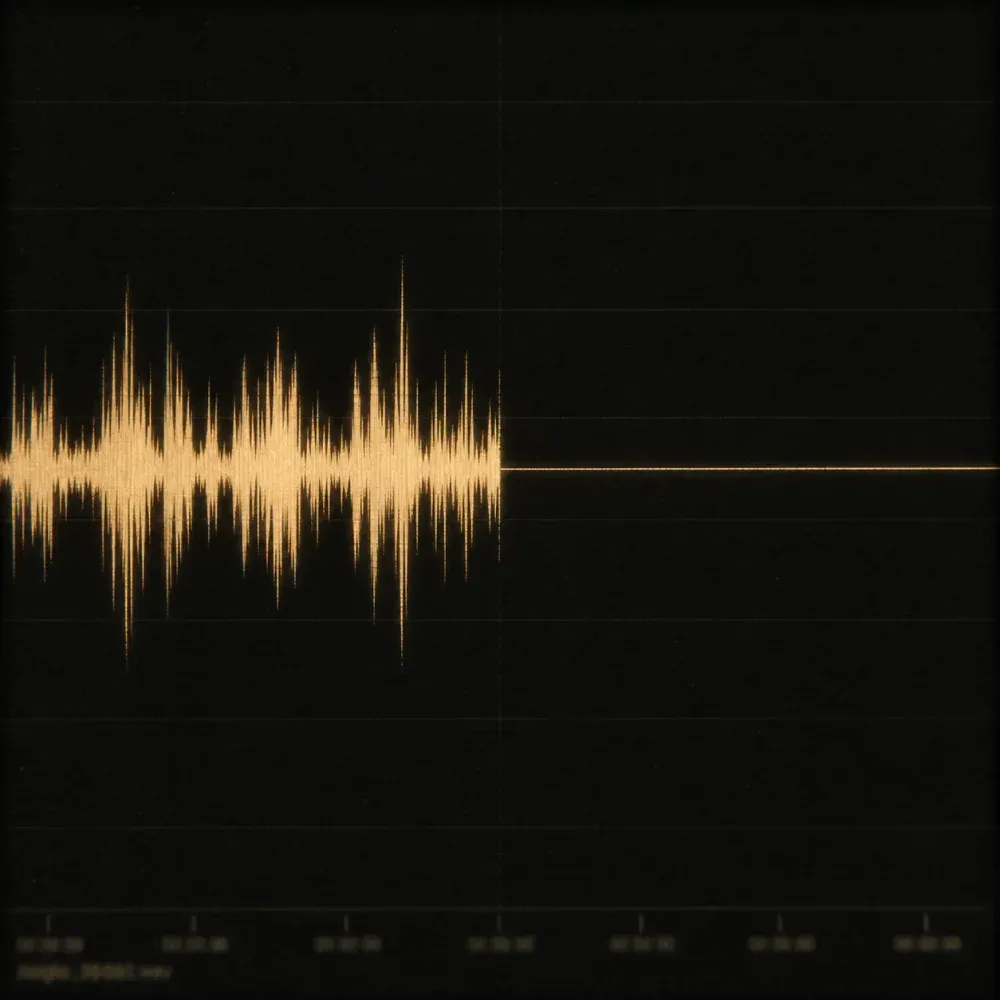
Ben Hania keeps cutting to the real thing: actual footage of the real volunteers on a phone screen, the audio waveform of Hind’s voice with the file name in the corner, the real dispatchers’ voices layered over the actors’. She has said she did it so it could not become a Hollywood thriller. It works. You are never allowed to forget that this is evidence.
I want to name the people. The real Omar al-Qam, Rana Faqih, Mahdi Aljamal and Nisreen Qawas, who sat in that room and did their jobs for three hours knowing how it would probably end. Yusuf al-Zeino and Ahmed al-Madhoun, who drove towards a tank because someone told them a route was clear. And Motaz Malhees, Saja Kilani, Amer Hlehel and Clara Khoury, who agreed to be the faces for that. Qawas has said the tensions the film shows, colleagues shouting and hitting the wall as the clock ran, were accurate, and that the people in the room were not the ones failing. “It was the occupation that kept failing us.”
The Athenaeum was founded in 1797, named for the Greek goddess of wisdom, and is a proprietary library and members’ club. It has a newsroom, a dining room and one of the better private book collections in the country. It is not, on the face of it, a natural home for a Tunisian docudrama about Gaza. Go and look at the website. This is not the usual fare.
The audience was more varied than I expected. A few Palestinians, clearly. Older women. Younger people. A proper mix for a private club on a Saturday, and none of the polite drift towards the exits you get when a screening runs heavy.
Somebody had to decide to put this on there, and I doubt it was an easy sell. The organiser said something before it started that I have not been able to put down since. We need to bear witness, and we need to hold up the truth.
When the credits came up nobody spoke. People stood, collected their coats and filed out without a word, and the silence followed us down the stairs and out into Church Alley, where it was a Saturday night in Liverpool: bars full, music, people laughing on the pavement. Two worlds a staircase apart. It was the gap between them that stayed with me.
I have spent thirty years in a trade where the evidence is the argument. Logs, captures, timestamps, a hash that matches or does not. What happened to Hind Rajab was captured. Her voice was recorded. The bullet holes were counted. The rate of fire was measured. The sabot was photographed. The deleted press release was cached. None of it was ambiguous, and all of it was denied, and the denial was reported as a competing claim for two and a half years.
The film did not create the truth. It held it up, in a form people could not scroll past, for long enough that the denial stopped working. A room full of strangers in Liverpool sat with it for ninety minutes and then walked out without a word, and I suspect most of them are still carrying it.
That is what bearing witness is. Not a feeling. A job.