code · · 7 min read
by Colin Domoney
I have sat through more corporate webinars than I care to remember, and delivered a fair number of them too. You know the format: a registration wall, a marketing follow-up sequence, forty slides, and an audience that had to be bribed to attend and couldn’t wait to leave. Question time produced one of three things: silence, a planted softball, or a man who had waited fifty minutes to explain why I was wrong. Somewhere along the way I stopped expecting anything else.
This month I finished a three-part webinar series for Gaza Sky Geeks, talking to their technical community about AI and the future of work. Across three Sunday afternoons I spent roughly seven hours live, and nearly three of those hours were Q&A. Every session overran, the second one by thirty-five minutes, with people still queuing for the mic when Liza, our host, finally had to cut the line and redirect everyone to LinkedIn. That session was the longest single talk I have given in my life, of any kind, anywhere. We ran an AI-generated satisfaction survey afterwards, and its only recorded criticism was that the sessions were never long enough.
I have never experienced anything like it, and I want to say thank you properly. This post is that.
The series ran across June and July: one session on the strategic picture (over 300 registrations), one for developers, one for marketing, sales, and other non-technical professionals. GSG handled the onboarding in Arabic; I presented in English, with live demos, polls, and open-mic questions throughout. One participant waited over an hour with his hand up and opened with “Finally. For your information, I am the third one who raised his hand.” Another had a broken microphone, so he typed a multi-paragraph question into the chat and had it read aloud rather than not ask. Think about that the next time you sit silently through a company all-hands.
The same underlying worries surfaced in every session, from different people, in different words. Condensed, they were these:
These were not softball questions. Several forced me to admit, live, that I didn’t have a good answer, and one of them (why frameworks eliminated SQL injection by construction but models haven’t) was the best question I have been asked at any event in quite some time. And behind the questions sat the courage to ask them: a man describing a three-year gap in his career because of the war, then asking a sharp two-part question about competing in an AI economy. A young woman saying “I feel stuck” on an open mic in front of a hundred peers, then pushing back when my first answer was too vague. Another asked six questions in her second language, including admitting she didn’t know what some of the tools even were. Her words at the end: “my courage exists now.” That line has stayed with me.
The honest answers to those eight questions don’t fit in a blog post, and I’m turning them into a proper series over at Defending Dev (coming soon). But three things came out of my mouth in every single session, unprompted, because they are the closest thing I have to universal advice:
Invest in your people skills. As AI commoditises technical output, the things it cannot do compound in value: communication, empathy, relationships, supervising work you didn’t do yourself. We sell products to people, not to AI. Communicating clearly is now a technical skill.
Build your network. Nobody hires a CV. One of GSG’s own interns got her position by cold-approaching me on LinkedIn after a webinar exactly like these. The mechanism works; I have watched it work.
Work out loud, in public. You cannot afford to be invisible. When I’m hiring, I don’t read the CV, I go straight to the GitHub profile. Build things, write about them, have opinions. I know it feels like you’re not entitled to strong opinions early in your career. You are.
None of this is original advice, and I never pretended otherwise. What I promised was that it was actionable from a bedroom in Gaza or Ramallah, today, for free.
In the developer session, Tareq asked me the hardest question of the series. He had worked at a US AI startup and automated his entire workflow; he got laid off precisely because AI let fewer people do more, and now his CV bounces everywhere. “If you were me, what would you do?” I refused to sugarcoat it. Luck and circumstance are real, the market is brutal, and I said so.
About a week later, this appeared on LinkedIn. Tareq had spent “the better part of a week” building a personal AI agent on Hermes, the open-source stack I’d recommended in the session: one that lives on his machine, reads his CV, drafts cover letters, and scans job boards. His own words carry the insight better than mine could: “The most valuable part wasn’t the setup itself. It was being forced to map out my own workflow… There’s no better exercise for understanding your process than building the thing that automates parts of it.”
He asked the question, took the answer, pointed the tooling at his own job hunt, and then wrote about it in public. That is all three pieces of advice, executed in one move, within a week, by the man who had every right to conclude the advice was worthless. Tareq did the work. The webinar just pointed.
A word about Liza, GSG’s Technical Unit Officer, who was not a host so much as a co-star. She translated, relayed chat questions with real editorial judgment, answered some herself, pushed back on me when I was vague, and supplied half the best lines of the series, including, when I hesitated to demo my agent posting to my X account live: “Everyone is embarrassing on X, that’s fine.” She admitted she normally admits students to awareness sessions and quietly leaves. She stayed for all seven hours, across three Sundays. Thank you, Liza, and thank you Raghad and Sohaib too.
Earlier this week I wrote No barriers, about leaving a corporate world that never connected to anything and finding one that does. I named three things that replaced the disconnection: passion, purpose, and people.
In those seven hours of webinars, I found all three in abundance.
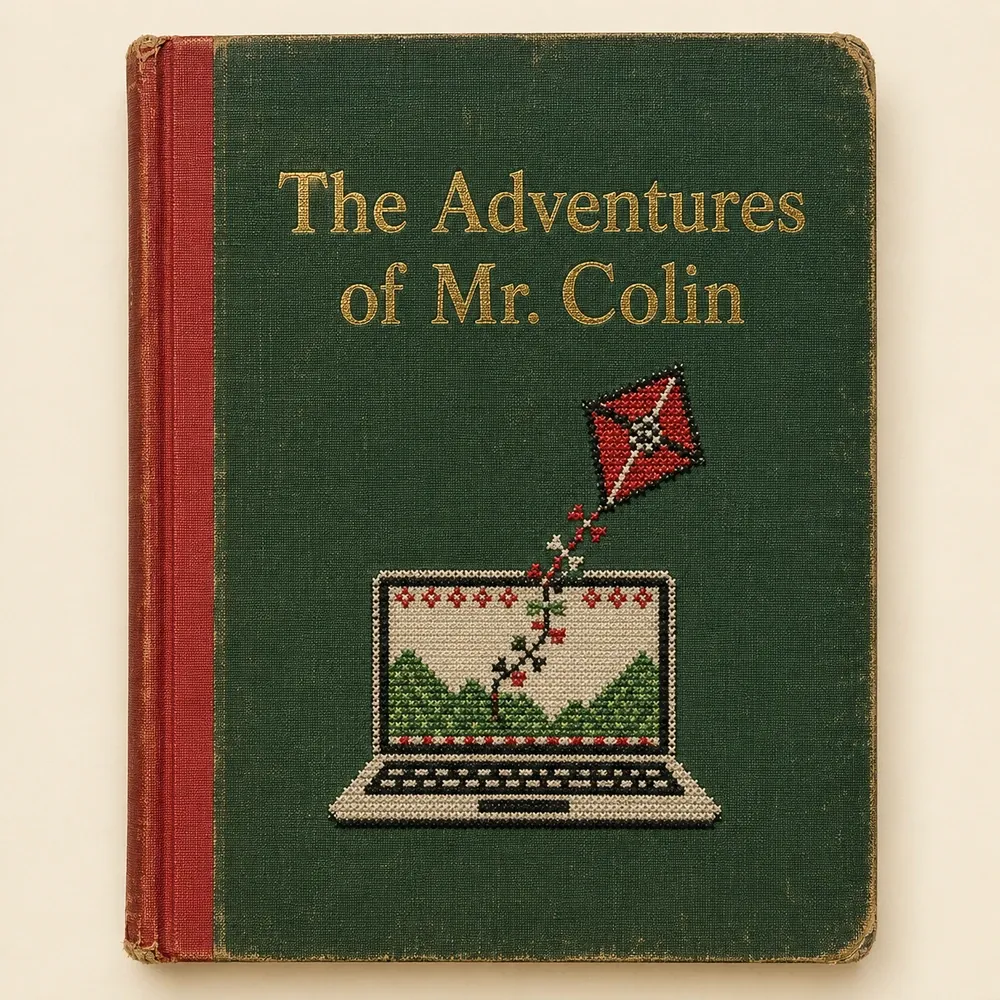
Throughout the series, the participants called me “Mr. Colin.” As I understand it, it’s an honorific their culture reserves for teachers and elders, and I will admit I found it impossibly endearing. I understand the respect it’s meant to carry, and I don’t take it lightly.
But let’s be honest about the direction of the debt. A community living through catastrophe gave up three Sunday afternoons, took the mic in a second language, asked me the best questions of my career, and stayed long past the end because they wanted more. They gave me their time, their trust, and their courage.
The honour, entirely, is mine.